You play white and go first. Tap a piece, then a dot. Win by checkmate: attack the red king so it cannot escape.
Welcome back. The game is where you left it.
Taken back. Try something else.
Taken back. The first result stays in your record.
No hint this time.
The computer could not find its move. Press New game to start over.
The level is now Beginner, from the computer's next move.
That starts with the next game.
Nothing to take back yet.
Undo comes back when it is your turn.
Hints come back when it is your turn.
The game is over. Tap the board or press New game to play another.
A hint is on its way.
The computer is thinking about its move.
You play red and go first. Tap a piece, then a dot. Win by checkmate: attack the white king so it cannot escape.
You play red and go first. Tap a piece, then where it goes. Win by checkmate: attack the white king so it cannot escape.
You play red, and the computer goes first with white. Win by checkmate: attack the white king so it cannot escape.
That is the computer's piece. Yours are the red ones.
You play white and go first. Tap a piece, then a dot. Win by checkmate: attack the red king so it cannot escape.
You play white and go first. Tap a piece, then where it goes. Win by checkmate: attack the red king so it cannot escape.
You play white, and the computer goes first with red. Win by checkmate: attack the red king so it cannot escape.
That is the computer's piece. Yours are the white ones.
The computer moved a knight. Tap a piece, then where it goes. This position has come up twice. A third time is a draw.
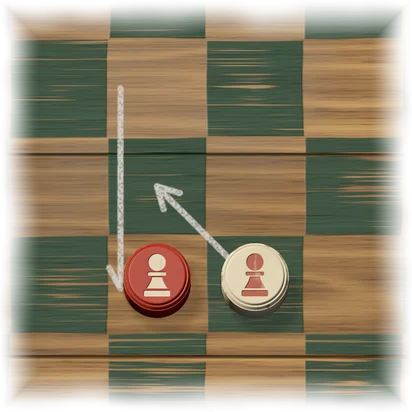
Taken back. Try something else. Your pawn can take the pawn that just passed it, landing behind it. Only on this move.
Your pawn can take the pawn that just passed it, landing behind it. Only on this move. The dashed rings show its move.
The computer moved a knight. This position has come up twice. A third time is a draw. The dashed rings show its move.
The computer took your bishop. Your pawn can take the pawn that just passed it, landing behind it. Only on this move.
The computer castled. Your king is attacked. Move it, block the attack or take the attacker. Tap a piece, then a dot.
Taken back. The first result stays in your record. 10 more moves each with no capture or pawn move, and it is a draw.
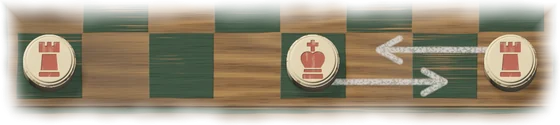
Tap a piece, then where it goes. You can castle: move the king two squares toward a rook, and the rook hops over it.
The computer moved a knight. Your pawn can take the pawn that just passed it, landing behind it. Only on this move.
The computer took your pawn in passing. Its king went two squares and the rook hopped over it. You can do that too.
The computer took your pawn in passing. A pawn that has just moved two squares can be taken as if it had moved one.
Welcome back. The game is where you left it. Your king is attacked. Move it, block the attack or take the attacker.
Taken back. Try something else. You can castle: move the king two squares toward a rook, and the rook hops over it.
Taken back. The first result stays in your record. Tap a piece, then where it goes. The dashed rings show its move.
The computer moved a knight.
The computer took your bishop.
The computer castled.
The computer took your pawn in passing.
The computer's pawn reached your back row and became a bishop.
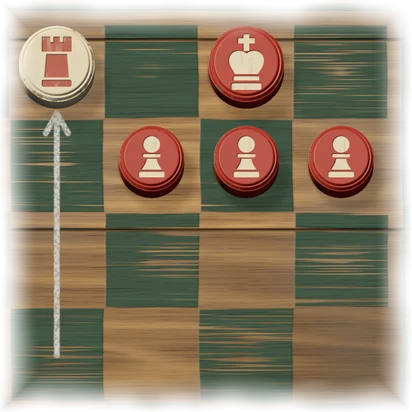
Your pawn reached the far row. Pick the piece it becomes. A queen is the strongest.
No piece picked, so the pawn stays where it is.
Pick one of your pieces first. The ones with a ring can move.
That king has nowhere to go right now. The ones with a ring can move.
You are in check, and that king cannot stop it. One with a ring can.
Every square next to your king is attacked or taken. The ones with a ring can move.
A king moves one square in any direction. The dots show where it can go.
Something is in the way. A king cannot jump over pieces. The dots show where it can go.
That square is attacked. A king may not move into check.
That queen has nowhere to go right now. The ones with a ring can move.
You are in check, and that queen cannot stop it. One with a ring can.
That queen shields your king: if it moved, the king would be in check.
A queen moves straight or diagonally, as far as the way is clear. The dots show where it can go.
Something is in the way. A queen cannot jump over pieces. The dots show where it can go.
That would leave your king in check: the queen is shielding it.
That rook has nowhere to go right now. The ones with a ring can move.
You are in check, and that rook cannot stop it. One with a ring can.
That rook shields your king: if it moved, the king would be in check.
A rook moves straight along a row or a column, as far as the way is clear. The dots show where it can go.
Something is in the way. A rook cannot jump over pieces. The dots show where it can go.
That would leave your king in check: the rook is shielding it.
That bishop has nowhere to go right now. The ones with a ring can move.
You are in check, and that bishop cannot stop it. One with a ring can.
That bishop shields your king: if it moved, the king would be in check.
A bishop moves diagonally, as far as the way is clear. The dots show where it can go.
Something is in the way. A bishop cannot jump over pieces. The dots show where it can go.
That would leave your king in check: the bishop is shielding it.
That knight has nowhere to go right now. The ones with a ring can move.
You are in check, and that knight cannot stop it. One with a ring can.
That knight shields your king: if it moved, the king would be in check.
A knight moves in an L: two squares one way, then one to the side. The dots show where it can go.
Something is in the way. A knight cannot jump over pieces. The dots show where it can go.
That would leave your king in check: the knight is shielding it.
That pawn has nowhere to go right now. The ones with a ring can move.
You are in check, and that pawn cannot stop it. One with a ring can.
That pawn shields your king: if it moved, the king would be in check.
A pawn moves one square straight ahead, and takes one square diagonally ahead. The dots show where it can go.
Something is in the way. A pawn cannot jump over pieces. The dots show where it can go.
That would leave your king in check: the pawn is shielding it.
You are in check, and that move does not get you out of it.
A pawn cannot take straight ahead, so a piece in front of it stops it.
A pawn may move two squares only from the row it started on.
A pawn moves diagonally only when it takes a piece.
You cannot castle: the king has already moved in this game.
You cannot castle on that side: the rook there has moved or is gone.
You cannot castle yet: the squares between the king and the rook must be empty.
You cannot castle out of check. Move the king, block the attack or take the attacker.
You cannot castle there: the king would cross a square that is under attack.
You cannot castle there: the king would end up in check.
Try the piece in the ring. The other ring is where it goes.
Try the pawn in the ring, and make it a bishop.
You beat Beginner. Checkmate: its king cannot escape. Tap the board or press New game to play another.
You lost to Beginner. Checkmate: your king cannot escape. Tap the board or press New game to try again.
A draw with Beginner. Stalemate: you cannot move and are not in check. Tap the board or press New game to play another.
Three wins in a row on Beginner. Easy is one step up, under Opponent. Checkmate: its king cannot escape.
Three wins in a row on Medium. Hard is one step up, under Opponent. Checkmate: its king cannot escape.
Three losses in a row on Easy. Beginner is one step down, under Opponent. Checkmate: your king cannot escape.
Three losses in a row on Expert. Hard is one step down, under Opponent. Checkmate: your king cannot escape.
You beat Beginner. Checkmate: its king cannot escape. Tap the board or press New game to play another.
You lost to Beginner. Checkmate: your king cannot escape. Tap the board or press New game to try again.
A draw with Beginner. Fifty moves each with no capture or pawn move. Tap the board or press New game to play another.
Three wins in a row on Beginner. Easy is one step up, under Opponent. Checkmate: its king cannot escape.
Three wins in a row on Medium. Hard is one step up, under Opponent. Checkmate: its king cannot escape.
Three losses in a row on Easy. Beginner is one step down, under Opponent. Checkmate: your king cannot escape.
Three losses in a row on Expert. Hard is one step down, under Opponent. Checkmate: your king cannot escape.
You beat Beginner. Checkmate: its king cannot escape. Tap the board or press New game to play another.
You lost to Beginner. Checkmate: your king cannot escape. Tap the board or press New game to try again.
A draw with Beginner. Too few pieces are left for a checkmate. Tap the board or press New game to play another.
Three wins in a row on Beginner. Easy is one step up, under Opponent. Checkmate: its king cannot escape.
Three wins in a row on Medium. Hard is one step up, under Opponent. Checkmate: its king cannot escape.
Three losses in a row on Easy. Beginner is one step down, under Opponent. Checkmate: your king cannot escape.
Three losses in a row on Expert. Hard is one step down, under Opponent. Checkmate: your king cannot escape.
You beat Beginner. Checkmate: its king cannot escape. Tap the board or press New game to play another.
You lost to Beginner. Checkmate: your king cannot escape. Tap the board or press New game to try again.
A draw with Beginner. The same position came up three times. Tap the board or press New game to play another.
Three wins in a row on Beginner. Easy is one step up, under Opponent. Checkmate: its king cannot escape.
Three wins in a row on Medium. Hard is one step up, under Opponent. Checkmate: its king cannot escape.
Three losses in a row on Easy. Beginner is one step down, under Opponent. Checkmate: your king cannot escape.
Three losses in a row on Expert. Hard is one step down, under Opponent. Checkmate: your king cannot escape.
Two players, one board. White goes first. Tap a piece, then a dot. Checkmate wins.
Two players, one board. White goes first. Tap a piece, then where it goes. Checkmate wins.
Checkmate: a king is attacked and cannot escape.
The white king is attacked. Move it, block the attack or take the attacker.
That is a red piece. It is white's move.
Pick a white piece first. The ones with a ring can move.
The pawn reached the far row. Pick the piece it becomes. A queen is the strongest.
Checkmate: the white king cannot escape. Tap the board or press New game to play another.
Stalemate: white cannot move and is not in check. Tap the board or press New game to play another.
Welcome back. The game is where you left it. This position has come up twice. A third time is a draw.