The tiles are being dealt.
Welcome back. The game is where you left it.
No hint this time.
The computer could not find its move. Press New game to start over.
The level is now Beginner, from the computer's next move.
That starts with the next game.
Nothing to take back yet.
Undo comes back when it is your turn.
Hints come back when it is your turn.
The game is over. Tap the board or press New game to play another.
A hint is on its way.
You hold the highest double, so you start. Tap the 6-6 to lay it down.
The computer holds the highest double, the 6-6, and starts with it.
You hold the highest double, so you start, with any tile. Tap one to lay it down.
The computer holds the highest double, so it starts, with any tile.
You hold the heaviest tile, so you start. Tap the 6-6 to lay it down.
The computer holds the heaviest tile, the 6-6, and starts with it.
You hold the heaviest tile, so you start, with any tile. Tap one to lay it down.
The computer holds the heaviest tile, so it starts, with any tile.
Round 12. You hold the highest double, so you start, with any tile.
Round 12. The computer holds the highest double, so it starts.
Round 12. You hold the heaviest tile, so you start, with any tile.
Round 12. The computer holds the heaviest tile, so it starts.
Round 12. The lead takes turns and is yours now. Start with any tile.
Round 12. The lead takes turns, and this time the computer starts.
Round 12. You went out last round, so you start, with any tile.
Round 12. The computer went out last round, so it starts.
The tiles are being dealt.
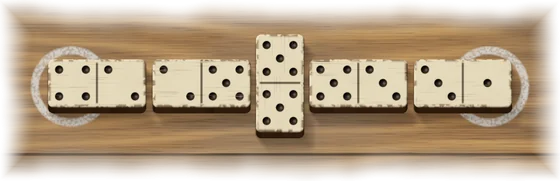
Tap a tile that has the same number as an open end.
Lay your last tile to win the round and score the computer's dots. First to 100 wins.
When the open ends add up to 5, 10, 15 and so on, you score that many. First to 100 wins.
Lay your last tile to win the round and score the other side's dots. First to 100 wins.
Lay your last tile to win the round and score the computer's dots. First to 250 wins.
When the open ends add up to 5, 10, 15 and so on, you score that many. First to 250 wins.
Lay your last tile to win the round and score the other side's dots. First to 250 wins.
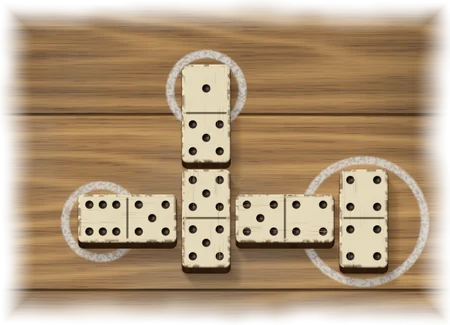
The first double is the spinner: now its two short ends are open too.
The chalk number is what the open ends add up to.
Tap a tile that has the same number as an open end. The chalk number is what the open ends add up to.
The dashed frame marks its tile.
The computer played the 6-6.
The computer played the 6-6. Tap a tile that has the same number as an open end.
The computer played the 6-6. The dashed frame marks its tile.
The computer played the 6-6. Tap a tile that has the same number as an open end. The dashed frame marks its tile.
The computer played the 6-6. Lay your last tile to win the round and score the computer's dots. First to 100 wins.
The computer drew 12 tiles and played the 6-6.
The computer drew 12 tiles and played the 6-6. Tap a tile that has the same number as an open end.
The computer drew 12 tiles and played the 6-6. The dashed frame marks its tile.
The computer played the 6-6. The ends add up to 20: 20 points to it.
The computer played the 6-6. The ends add up to 20: 20 points to it. The dashed frame marks its tile.
The computer drew 12 tiles and played the 6-6. The ends add up to 20: 20 points to it.
You passed. The computer played the 6-6.
You passed. The computer played the 6-6. Tap a tile that has the same number as an open end.
You passed. The computer played the 6-6. The dashed frame marks its tile.
You passed. The computer drew 12 tiles and played the 6-6. The ends add up to 20: 20 points to it.
You passed. The computer played the 6-6. The ends add up to 20: 20 points to it.
You passed. The computer played the 6-6. The ends add up to 20: 20 points to it. The dashed frame marks its tile.
The computer has no tile that fits, so it passes.
The computer has no tile that fits, so it passes. Tap a tile that has the same number as an open end.
The computer has no tile that fits, so it passes. The dashed frame marks its tile.
The computer drew 12 tiles and still has nothing that fits, so it passes.
The computer drew 12 tiles and still has nothing that fits, so it passes. The dashed frame marks its tile.
The computer has no tile that fits and cannot draw, so it passes.
The computer has no tile that fits and cannot draw, so it passes. Tap a tile that has the same number as an open end.
The computer has no tile that fits and cannot draw, so it passes. The dashed frame marks its tile.
Welcome back. The game is where you left it. Tap a tile that has the same number as an open end.
Welcome back. The game is where you left it. The dashed frame marks its tile.
Taken back. Nothing is reshuffled, so the same tiles turn up again.
Taken back. Nothing is reshuffled, so the same tiles turn up again. The dashed frame marks its tile.
Taken back. The first result stays in your record.
Taken back. The first result stays in your record. Tap a tile that has the same number as an open end.
Taken back. The first result stays in your record. The dashed frame marks its tile.
Tap a tile that has the same number as an open end. The dashed frame marks its tile.
The dashed frame marks its tile. Lay your last tile to win the round and score the computer's dots. First to 100 wins.
The computer played the 6-6. When the open ends add up to 5, 10, 15 and so on, you score that many. First to 250 wins.
The computer played the 6-6. The first double is the spinner: now its two short ends are open too.
The computer played the 6-6. The chalk number is what the open ends add up to.
The computer played the 6-6. The dashed frame marks its tile. The chalk number is what the open ends add up to.
The computer drew 12 tiles and played the 6-6. The first double is the spinner: now its two short ends are open too.
The computer drew 12 tiles and played the 6-6. The chalk number is what the open ends add up to.
The computer played the 6-6. The ends add up to 20: 20 points to it. The chalk number is what the open ends add up to.
You passed. The computer played the 6-6. The first double is the spinner: now its two short ends are open too.
You passed. The computer played the 6-6. The chalk number is what the open ends add up to.
The computer has no tile that fits, so it passes. The chalk number is what the open ends add up to.
The computer has no tile that fits and cannot draw, so it passes. The chalk number is what the open ends add up to.
Welcome back. The game is where you left it. The first double is the spinner: now its two short ends are open too.
Welcome back. The game is where you left it. The chalk number is what the open ends add up to.
Taken back. Nothing is reshuffled, so the same tiles turn up again. The chalk number is what the open ends add up to.
Taken back. The first result stays in your record. The chalk number is what the open ends add up to.
The dashed frame marks its tile. The first double is the spinner: now its two short ends are open too.
The dashed frame marks its tile. The chalk number is what the open ends add up to.
The computer has no tile that fits, so it draws.
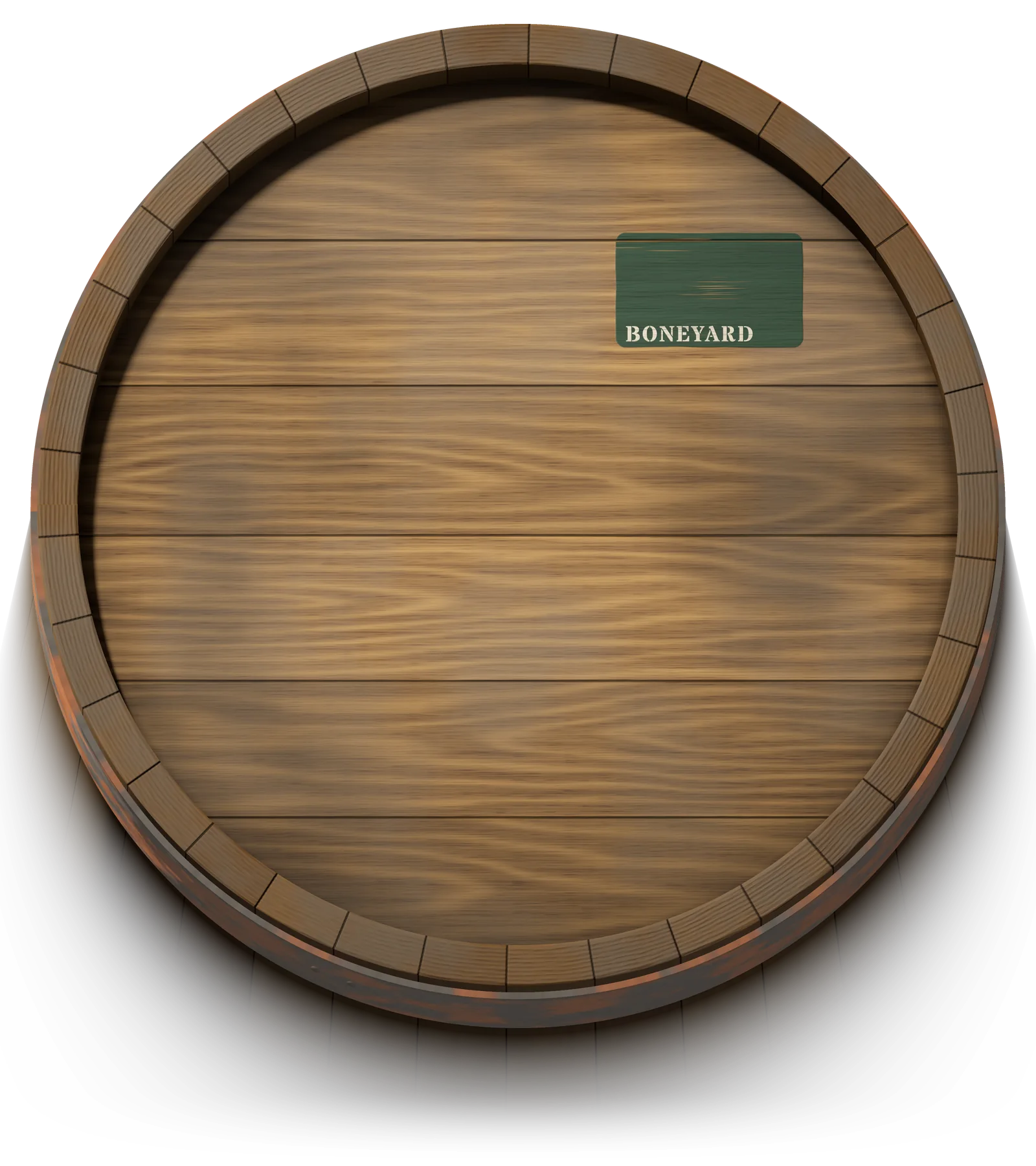
None of your tiles fits. Tap the boneyard, the pile at the top right, to draw. Keep drawing until one fits.
None of your tiles fits. Tap the boneyard to draw.
The computer played the 6-6. None of your tiles fits. Tap the boneyard to draw.
The computer has no tile that fits, so it passes. None of your tiles fits. Tap the boneyard to draw.
You drew the 6-6, and it fits.
You drew the 6-6. It does not fit either, so draw again.
None of your tiles fits, and in Block nobody draws, so you pass.
You drew the 6-6, and it does not fit, and in Block nobody draws, so you pass.
None of your tiles fits. The last two tiles in the boneyard stay there, so you pass.
You drew the 6-6, and it does not fit. The last two tiles in the boneyard stay there, so you pass.
None of your tiles fits, and the boneyard is empty, so you pass.
You drew the 6-6, and it does not fit, and the boneyard is empty, so you pass.
The ends add up to 20: 20 points to you.
The 6-6 fits more than one end. Tap the end you want, where the chalk dots are.
The 6-6 fits more than one end. Tap the end you want.
The 6-6 does not fit: it needs a 6, a 5, a 4 or a 3. The tiles pushed forward fit.
The 6-6 does not fit: it needs a 6 or a 5.
The highest double has to start the first round: tap the 6-6.
The heaviest tile has to start the first round: tap the 6-6.
The 6-6 does not fit there: that end is a 6.
Pick one of your tiles first. The ones pushed forward fit.
You have a tile that fits, so you have to play it. The boneyard is for when nothing fits.
In Block nobody draws. The tiles in the boneyard sit out the round.
The last two tiles in the boneyard are never drawn.
The boneyard is empty.
Those are the computer's tiles, face down. Yours lie at the bottom.
The computer is making its move.
Try the 6-6, on the end with the ring.
Nothing fits, so the only move is to draw from the boneyard.
You went out. The computer had 168 dots left: 168 points to you. Tap the lid for the next round.
The computer went out. You had 168 dots left: rounded to 170 for it. Tap the lid for the next round.
You went out. The computer had 1 dot left: 1 point to you. Tap the lid for the next round.
Nobody can play. Fewest dots wins: you have 60, the computer 68. 70 points to you. Tap the lid for the next round.
Nobody can play. Fewest dots wins: you have 68, the computer 60. 8 points to it. Tap the lid for the next round.
Nobody can play. Both have 66 dots left, so nobody scores. Tap the lid for the next round.
You beat Beginner. You went out: 268 to 245. Tap the board or press New game to play another.
You lost to Beginner. The computer went out: 268 to 245. Tap the board or press New game to try again.
Three wins in a row on Beginner. Easy is one step up, under Opponent. You went out: 268 to 245.
Three wins in a row on Medium. Hard is one step up, under Opponent. You went out: 268 to 245.
Three losses in a row on Easy. Beginner is one step down, under Opponent. The computer went out: 268 to 245.
Three losses in a row on Expert. Hard is one step down, under Opponent. The computer went out: 268 to 245.
You beat Beginner. Blocked, and you had fewer dots: 268 to 245. Tap the board or press New game to play another.
You lost to Beginner. Blocked, and it had fewer dots: 268 to 245. Tap the board or press New game to try again.
Three wins in a row on Beginner. Easy is one step up, under Opponent. Blocked, and you had fewer dots: 268 to 245.
Three wins in a row on Medium. Hard is one step up, under Opponent. Blocked, and you had fewer dots: 268 to 245.
Three losses in a row on Easy. Beginner is one step down, under Opponent. Blocked, and it had fewer dots: 268 to 245.
Three losses in a row on Expert. Hard is one step down, under Opponent. Blocked, and it had fewer dots: 268 to 245.
You beat Beginner. Your points reached the goal: 268 to 245. Tap the board or press New game to play another.
You lost to Beginner. Its points reached the goal: 268 to 245. Tap the board or press New game to try again.
Three wins in a row on Beginner. Easy is one step up, under Opponent. Your points reached the goal: 268 to 245.
Three wins in a row on Medium. Hard is one step up, under Opponent. Your points reached the goal: 268 to 245.
Three losses in a row on Easy. Beginner is one step down, under Opponent. Its points reached the goal: 268 to 245.
Three losses in a row on Expert. Hard is one step down, under Opponent. Its points reached the goal: 268 to 245.
Two players, one screen. Red holds the highest double, the 6-6, and starts with it.
Two players, one screen. Red holds the highest double and starts, with any tile.
The highest double has to start the first round: red plays the 6-6.
Two players, one screen. Red holds the heaviest tile, the 6-6, and starts with it.
Two players, one screen. Red holds the heaviest tile and starts, with any tile.
The heaviest tile has to start the first round: red plays the 6-6.
Round 12. Red holds the highest double and starts.
Round 12. Red holds the heaviest tile and starts.
Round 12. The lead takes turns: red starts, with any tile.
Round 12. Red went out last round and starts.
Hand the screen to red. Then tap the lid to turn red's tiles face up.
Red drew 12 tiles and played the 6-6. The ends add up to 20: 20 points to red. Now pass the screen to red.
Red drew 12 tiles and played the 6-6. Hand the screen to red. Then tap the lid to turn red's tiles face up.
Red played the 6-6. Hand the screen to red. Then tap the lid to turn red's tiles face up.
Red had no tile that fits and passed. Hand the screen to red. Then tap the lid to turn red's tiles face up.
Those are red's tiles, face down. It is red's move.
Red went out. Red had 168 dots left: rounded to 170 for red. Tap the lid for the next round.
Two players, one screen. White holds the highest double, the 6-6, and starts with it.
Two players, one screen. White holds the highest double and starts, with any tile.
The highest double has to start the first round: white plays the 6-6.
Two players, one screen. White holds the heaviest tile, the 6-6, and starts with it.
Two players, one screen. White holds the heaviest tile and starts, with any tile.
The heaviest tile has to start the first round: white plays the 6-6.
Round 12. White holds the highest double and starts.
Round 12. White holds the heaviest tile and starts.
Round 12. The lead takes turns: white starts, with any tile.
Round 12. White went out last round and starts.
Hand the screen to white. Then tap the lid to turn white's tiles face up.
White drew 12 tiles and played the 6-6. The ends add up to 20: 20 points to white. Now pass the screen to white.
White drew 12 tiles and played the 6-6. Hand the screen to white. Then tap the lid to turn white's tiles face up.
White played the 6-6. Hand the screen to white. Then tap the lid to turn white's tiles face up.
White had no tile that fits and passed. Hand the screen to white. Then tap the lid to turn white's tiles face up.
Those are white's tiles, face down. It is white's move.
White went out. White had 168 dots left: rounded to 170 for white. Tap the lid for the next round.
Nobody can play. Fewest dots wins: red has 60, white 68. 70 points to red. Tap the lid for the next round.
268 to 245. Tap the board or press New game to play another.